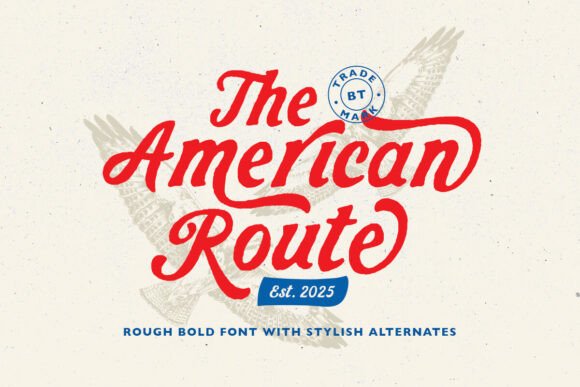
American Route: Vintage Script for Modern Branding
In a design landscape saturated with sleek, minimalist sans-serifs, sometimes a project demands a voice with more grit, history, and unmistakable character. This is where a font like American Route becomes an invaluable asset. It’s not just a typeface; it’s a direct conduit to a specific aesthetic, instantly evoking the rugged charm of vintage signage, the open road, and a sense of unbridled freedom.
From a professional design perspective, typography is the cornerstone of visual communication. The right font does more than display words—it sets a tone, conveys an emotion, and builds a foundational layer of brand identity. American Route, with its bold, handcrafted script style and rough textures, excels at injecting personality and nostalgia into creative projects. Its dynamic energy and stylish alternates offer designers a powerful tool for creating visuals that are both memorable and deeply resonant.
Practical Applications for Dynamic Visuals
The true value of a creative asset lies in its versatility and application. American Route is particularly effective across a range of design scenarios where heritage, authenticity, and a bold statement are key objectives. Consider its use in these contexts:
- Branding & Logo Design: It creates an instant retro or Americana feel for logos, especially for brands in outdoor gear, craft beverages, barbershops, or artisanal goods. The swashy flourishes add a unique, handcrafted touch to logomarks.
- Marketing & Advertising: In digital marketing campaigns or print ads, it grabs attention for headlines, taglines, and call-to-action buttons. It’s perfect for social media graphics, posters, and promotional materials that need to stand out with a vintage flair.
- Packaging & Merchandise: The font’s texture and character make it ideal for packaging design on labels, boxes, and apparel. It translates beautifully onto t-shirts, hats, and posters, enhancing the perceived value and story of a product.
- Editorial & Web Design: Used sparingly for headlines or pull quotes in editorial layouts or on websites, it can break the monotony of body text, adding visual interest and guiding the user’s eye through a hierarchy of information.
Integrating a Script Font Effectively
While a font like American Route is visually striking, its effectiveness hinges on thoughtful implementation. Here are key considerations for designers to ensure a polished and professional result:
- Prioritize Readability & Hierarchy: This style is best suited for display use—headlines, logos, and short phrases. For body text, pair it with a clean, highly legible sans-serif or serif font to maintain clarity and establish a clear visual hierarchy.
- Test Scalability and Context: Always preview the font at the sizes it will be used. A script font that looks stunning on a large poster may become illegible when reduced for a small UI element or mobile screen. Ensure it works within your specific color palette and alongside other imagery.
- Understand Audience and Brand Alignment: Does the vintage, rugged aesthetic align with your target audience’s expectations and the core values of the brand? Authenticity is key; mismatched typography can confuse the intended message.
- Leverage Stylistic Alternates: Fonts like this often include alternate characters. Use these features to customize letterforms, avoid repetitive looks, and add a unique, custom feel to your typography.
Ultimately, the goal of any design element is to serve the project’s communication goals. A typeface is a voice, and choosing one like American Route is a deliberate decision to speak in a tone of heritage, adventure, and bold confidence. When used with intention and paired with complementary design elements—a cohesive color palette, balanced composition, and supportive typography—it becomes more than an aesthetic choice. It becomes a strategic component that strengthens brand identity, enhances user engagement, and elevates the overall quality of the creative project, proving that the right assets are fundamental to effective visual storytelling.